

Trotsky and Trotskyism

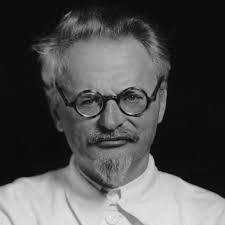
Translated by comrades from League of Internationalist Communists
Lev Davidovich Bronstein was born in 1879 and was a revolutionary activist from a young age, first in Russian populism (in the city of Nikolayev) and later in social democracy and Russian Marxism. In 1899, he was arrested for his class organizing activities in Ukraine and sentenced to four years of exile in Siberia. With the agreement of his partner, Aleksandra Sokolovskaya, he escaped from prison and reached Europe, where he met Lenin for the first time in London. He participated in the writing of Iskra from a very young age. In the discussion at the Second Congress of the RSDLP, he initially sided with the Mensheviks (his document titled Report of the Siberian Delegation is famous, as is his later Our Political Tasks, in which he denounces Lenin’s Jacobin positions in a manner parallel to Rosa Luxemburg’s criticism of the leader of Russian Bolshevism), although he soon became a maverick of social democracy, fighting for reconciliation between the Bolsheviks and Mensheviks. His most important theory at this time was that of permanent revolution, which was based on a vision of capitalism as a global phenomenon since the 20th century: the idea of uneven and combined development that makes capitalism a global reality in all countries.
Hence, it is impossible to think of pure bourgeois revolutions in any country, unlike in the 19th century, and the present day is one of communist revolution in the form of permanent revolution (which combines the democratic tasks of the bourgeois revolution with the communist revolution). Trotsky began to think about permanent revolution after his participation in the 1905 revolution and in his book 1905: Results and Prospects. Although he had already begun to establish the first elements of his theory, based on the capitalist unification of the entire globe, from 1904 onwards in collaboration with the then left-wing social democrat Parvus.
During World War I, Trotsky took an internationalist position, although it was more lukewarm than that of Lenin and the Bolsheviks. Author of the Zimmerwald Manifesto, he returned to Russia at the beginning of the revolution (in May, a month later than Lenin). He led a small group of internationalist revolutionaries known as the Interdistrict Committee or mezhraiontsy, together with Riazanov, Ioffe, Lunacharsky, and Manuilsky. During the revolutionary days of June and July, he became increasingly close to the Bolsheviks. Lenin’s April Theses represented a programmatic rapprochement (the timeliness of the socialist revolution for both) and Trotsky recognized the fairness of Lenin’s positions on the separation between Bolsheviks and Mensheviks. In September 1917, the Interdistrict group joined the Bolshevik Party and Trotsky, along with other comrades from his group, became a member of its Central Committee.
During the early years of the Russian Revolution, Trotsky shared in the main decisions of the Bolshevik Party and the Communist International. However, there were a number of debates in which he and Lenin disagreed. For example, in the run-up to the October insurrection, Trotsky argued that it was necessary to wait for the Second Congress of Soviets to approve the insurrection. With regard to the Brest-Litovsk peace treaty, Trotsky took a middle ground between the position of immediate signing of the peace treaty (Lenin) and the revolutionary war of the Kommunist tendency (of Bukharin and Pyatakov), and in the debate at the end of the civil war, Lev Davidovich defended the militarization of labor and factories alongside Bukharin.
Upon Lenin’s death, and in fact more than a year before, Trotsky’s disagreements with Stalin and the group that was forming around him began (see Moshe Lewin’s book on Lenin’s last battle). These disagreements centered on the importance of the German Revolution of 1923 and the world revolution in general. Hence Trotsky’s criticism of the idea of socialism in one country as a reactionary deviation from proletarian internationalism. The first signs of conflict emerged through Trotsky’s platform and the forty-six against the bureaucratization of the party, which gave rise to the Left Opposition. In addition, Trotsky published two important texts, The New Course and, above all, Lessons of October, in which he returned to the Russian Revolution of 1917, clearly criticizing the positions opposed to the insurrection of Kamenev and Zinoviev, Stalin’s allies in the new troika. After the 14th Congress of the CPSU (1925), a rift developed between Kamenev, Zinoviev, and Stalin. The former reacted against the theory of socialism in one country adopted by the latter and theorized, in reality, by Bukharin. However, the party apparatus took it upon itself to defeat the so-called United Opposition between 1926 and 1927. Trotsky was definitively expelled from the party in December 1927, after the 15th Congress, which made socialism in one country a dogma of faith for all communist parties in the world (see also the 6th Congress of the Comintern). However, Kamenev and Zinoviev would capitulate to Stalin. Trotsky’s battles in relation to the Anglo-Russian Committee of 1926, the Chinese Revolution of 1927, the Sixth Congress of the Communist International, the question of fascism and Nazism, social fascism, Spain in the 1930s, etc., would be very important. For Trotsky, the world revolution was the nerve that straightened out the reality of communism as a real movement.
However, this perspective coincides with an analysis of Soviet reality characterized as a workers’ state, bureaucratically degenerated, as he will later say, where he defends an economic policy of primitive accumulation of capital and industrialization as if it were a socialist policy. See Preobrazhensky’s book The New Economics. This will be one of the great theoretical limitations of the left opposition. Identifying socialism with the nationalization of the economy, not clearly characterizing the capitalist nature of the USSR. A society that was always capitalist but also undergoing a process of political and ideological counterrevolution that transformed the proletarian nature of the CPSU and the class state. In this way, the Left Opposition believed that a socialist policy was possible in the USSR through industrialization. When Stalin, beginning in 1929, made a shift in his economic policy and broke with Bukharin and the right-wing opposition, all this caused a veritable stampede among the left-wing opponents: Preobrazhensky, Smilga, Smirnov, Radek, and other leaders capitulated to Stalin. To prevent this exodus, it was important that not only Trotsky but also Rakovsky intervened to emphasize how decisive the policy of the Communist International and the internal regime of the party were in establishing the characterization of Stalin’s alleged turn to the left. And yet Trotsky’s reflection is insufficient because it does not identify the deep threads that link Stalin’s Russian state policy to world capitalism in its rivalry/alliance with other states. And how those threads grip and transform the nature of the communist parties as a whole.
The battle of the Russian Left Opposition alongside that of other internationalist groups further to its left (see the Decists of Smirnov and Sapronov, who were also part of the United Opposition of 1925-1927 alongside the supporters of Zinoviev and Kamenev) is a heroic battle that allows us to continue to hold the banner of communism high in the face of counterrevolution today. Tens of thousands of comrades fought to the last, refusing to confess despite torture, with exemplary hunger strikes such as those in Magadan and Vorkuta, carrying out clandestine work and discussions in the gulags in the form of newspapers and even discussions on positions on the world class struggle. Not only Trotsky, but also the contribution of such important comrades as C. Rakovsky and his Professional Dangers of Power. Rakovsky reacted through this text, actually a letter to another comrade of the Opposition who was in another camp/gulag, to the stampede of militants from the Left Opposition. This was a battle of fundamental historical importance, as it was between the defense of proletarian internationalism and the perspective of world revolution, and those who, in defending an impossible national socialism, were encouraging the retreat of the revolution to local borders and subordinating that same revolution to the Russian state and the latter to the logic of world capitalism, as Bilan accurately insisted.
This work will be global and internationalist when, as Victor Serge said, it was midnight in the century. From China with Chen Du Xiu and other comrades to Vietnam with Ta Thu Thau or Ngo Van, from France to the United States, from Greece to Belgium or the Netherlands, left-wing opponents will try to mount an opposition in defense of international socialism against Stalin’s socialism in a single country and the anti-communist parties. This work will undoubtedly be a class and proletarian reaction to the counterrevolution. Today, when a new generation is throwing itself into militancy to radically transform society, it is crucial to distinguish the revolution from the counterrevolution and recognize the latter in the perspective of socialism in one country: not all cats are gray. Revolution is not the same as counterrevolution.
And yet, the limits of the reaction of the left opposition were already evident to the comrades of the Italian Communist Left who were active in exile at that time around the publications Bilan and Prometeo. There are three aspects we would like to focus on now: voluntarism, opportunism, and personalism.
The voluntarism of Trotsky’s position can be seen, for example, in the idea of building an independent party from 1933 and a revolutionary International from 1938 onwards in those conditions of counterrevolution (prior to 1933, Trotsky was confident in the possibility of straightening out the national communist parties and the Communist International itself). In contrast, the perspective of the Italian left was not only more accurate and realistic but also had a stronger theoretical foundation. Parties are not decreed or proclaimed; they are the product of the situation of the class struggle and, from there, can become active factors in it. That is why the tasks of the moment were those of a faction, independent of the communist parties that had become counterrevolutionary organizations, of theoretical clarification and accumulation of cadres, and of preparation for when the situation would be more favorable. Trotsky’s voluntarism would lead to a series of opportunistic zigzags with increasingly serious consequences.
This voluntarism translates into opportunism as the only way to concretely overcome the gulf between the objective counterrevolutionary situation and the subjective perspective of being able to reverse the situation with the appropriate and correct tactics. In this way, Trotsky sought to infiltrate the socialist parties (the so-called French turn), throwing himself into the development of democratic slogans that linked to the communist revolution (see his idea of the Transitional Program, in which he launched reformist slogans at the state, the idea of a workers’ and peasants’ government, and to the parties of the left, through the perspective of the united front, so that the experience of the proletarians in practice would overwhelm the reformist leaderships when they failed to meet those demands, and then the banners of the Fourth International would be unfurled), or the defense of the united front with social democracy in the case of the rise of fascism and Nazism. These insurmountable differences will lead to the expulsion of the Italian communist left from the left-wing opposition group, even more so when Gramscians such as Tresso, Leonetti, and Ravazzoli (the so-called New Left Opposition) join in Italy.
Furthermore, Trotsky’s entire position rests on a profound personalism. Whether in his criticism of Stalinism and the counterrevolution (exaggerating Stalin’s role in it, although Trotsky obviously qualifies many issues), but above all in his perspective of building the party and the International around his personality (rather than a rigid and clear program) and the use of intelligent tactics.
Shortly before his assassination, Trotsky defended an internationalist position in relation to World War II (defined as an imperialist war between two bourgeois blocs), although his defense of a proletarian military policy in the Allied armies, advocating worker and union control of military training, was highly opportunistic and favored the nationalist and bourgeois tendencies that would ultimately drag down the entire Fourth International.
Before his death, the debate over the nature of the USSR will be equally important. Trotsky, with some nuances, will continue to defend the working-class nature of the USSR, albeit degenerate, and the need to defend the USSR in the war. This will be challenged by American comrades such as Max Shachtman (who will create the Workers Party). In any case, as can be glimpsed in Natalia Sedova’s later positions on state capitalism, Trotsky would probably have ended up recognizing the capitalist nature of the USSR.
Trotsky’s opportunism would lay the ground for the counterrevolutionary positions in Trotskyism throughout World War II. Class independence and internationalism are what define a proletarian and communist organization as opposed to a counterrevolutionary one. During World War II, Trotskyism defended the national resistance movements of the Allies during the war, in addition to supporting the USSR and the Russian army. With this, it clearly moved to the political side of the bourgeoisie. From that moment on, Trotskyism was a force on the left of capital. However, as a sign of its internationalist character, albeit confused until then, different groups broke with it and positioned themselves in the communist camp: from Munis and his Spanish comrades to Ngo Van and other Vietnamese comrades, Stinas and the Greek comrades, and the Austrian group RKO.
This passage to counterrevolution will be definitively marked by the 1948 Congress, the Second Congress of the Fourth International, which will end with the abandonment of Trotskyism by Munis, Castoriadis, Stinas, Ngo Van… And other leaders who were not so clear-sighted and who will end up succumbing to leftism, such as Dunayevskaya and CLR James, not to mention Shachtman. Since then, Trotskyism has defended the working-class nature, albeit distorted, of all the regimes that fell under the Russian and Stalinist wing during the Cold War. Class independence was clearly abandoned. Thus, Pablo’s report to the Second Congress of the Fourth International already established that the main contradiction in the world was between the USSR and the United States. The USSR would be the positive side of the contradiction, along with the rest of the Stalinist parties. These would be forced to rely on the working class and develop the class struggle. That is why Pablo and the majority of the Fourth International supported the tactic of a united front with Stalinism, a Stalinist-reformist workers’ unity government, nationalizations. In short, it was a program of total subordination to Stalinism, which was defined, not only in the USSR, as a workers’ tendency, albeit a degenerate one.
Thus, the Third Congress of the Fourth International in August 1951 declared the structural assimilation of all Eastern European countries into the USSR and, therefore, they went from being capitalist countries to bureaucratically deformed workers’ states (as if “socialist production with capitalist distribution”) were possible. For orthodox Trotskyism (all groups that identify as Trotskyist today recognize this Congress except for Lutte Ouvrière, which stands out, however, for its electoralism, and the Cliffites, who characterized the USSR as state capitalism), capitalism could be overcome without a revolution, through the invasion of another national army such as that of the USSR. This operation actually concealed the expansion of the imperialist interests of Stalin’s USSR. The same theoretical operation carried out by official Trotskyism was also applied to Trotsky’s theory of permanent revolution. In this way, they spoke of countries that were bureaucratically deformed workers’ states because the economy was nationalized (such as China, Algeria, Cuba, Vietnam, etc.). Some Trotskyists, such as Ted Grant, the leader of the Militant tendency, went further and spoke of proletarian Bonapartism to describe this group of countries and some others such as Laos, Cambodia, Syria, Angola, Mozambique, Ethiopia, South Yemen, and even Benin. As we can see, the criterion was not the nature of social relations in these countries but the nationalization of the economy (as if that did not express the more general tendency of capitalist economies) and political and military affinities with the Soviet imperialist bloc and, in other cases, with the Chinese bloc (see, for example, the conflict in the 1970s between Pol Pot’s Maoist Cambodia and pro-Soviet Vietnam).
Trotskyism thus becomes a leftist appendage of Stalinism or, in other cases, of social democracy. There will be more clearly pro-Stalinist currents (those around the Greek-born leader Pablo, who in a 1951 document, Where Are We Going?, points out that the transition from capitalism to socialism will take several centuries, and therefore considers the existence of Stalinist regimes necessary for human emancipation and, faced with the possible prospect of a Third World War, he would be in favor of a sui generis entryism into the Communist Parties, from which organizations such as Anticapitalistas in Spain or the NPA in France would derive, and which would see Ernest Mandel as their most important and well-known leader), others such as the French Lambertists or The Militant in the United Kingdom would be more inclined towards entryism into social democracy. Ted Grant and Alan Woods’, The Militant engaged in entryism for decades in the British Labour Party, where they came to hold seats in Parliament and the mayoralty of Liverpool; or in the PSOE in Spain and the Lambertists, who even introduced a future former prime minister like Jospin into the PSF. And as National Secretary of the PSF, Lambert still met with him. Or the Peronist populism in the case of Argentine Morenism (from which, for example, the PSTU in Brazil or Corriente Roja in Spain derive, or in a less direct way, La Izquierda Diario. These examples clearly show us the true nature of the Trotskyist left of capital, always subordinate to the official currents of Stalinism and official social democracy. A current that, in its own theoretical, political, and practical trajectory, reveals its emptiness for the emancipation of the proletariat and the species.
Trotskyism became, as we say, an appendage of bourgeois organizations, thereby losing its class independence and its internationalist positions, which had confusingly marked the class reaction to the Stalinist counterrevolution. These bourgeois positions are shared by all Trotskyist groups with their democratism, their tactical maneuvering, their organizational maneuvers. Maintaining revolutionary positions today requires an explicit break with Trotskyism (even in its most critical experiences, such as those of Tony Cliff’s International Socialism, which have been shifting toward increasingly right-wing positions within the Trotskyist camp with their subordination to anti-globalization movements, nationalist and Islamist movements, and political leftism, or the “humanist” groups linked to Dunayevskaya, which fell into opportunism toward national liberation struggles).
The example of Trotskyism teaches us how important it is to draw communist lessons from counterrevolution. It is not enough to declare ourselves verbally against socialism in a single country and for world revolution. Tacticism always harbors opportunism that will ultimately devour the revolutionary program. Subordination to the official and counterrevolutionary currents of the workers’ movement, in the name of the logic of the lesser evil, means the loss of class independence and proletarian internationalism.